 Image 1 of 1
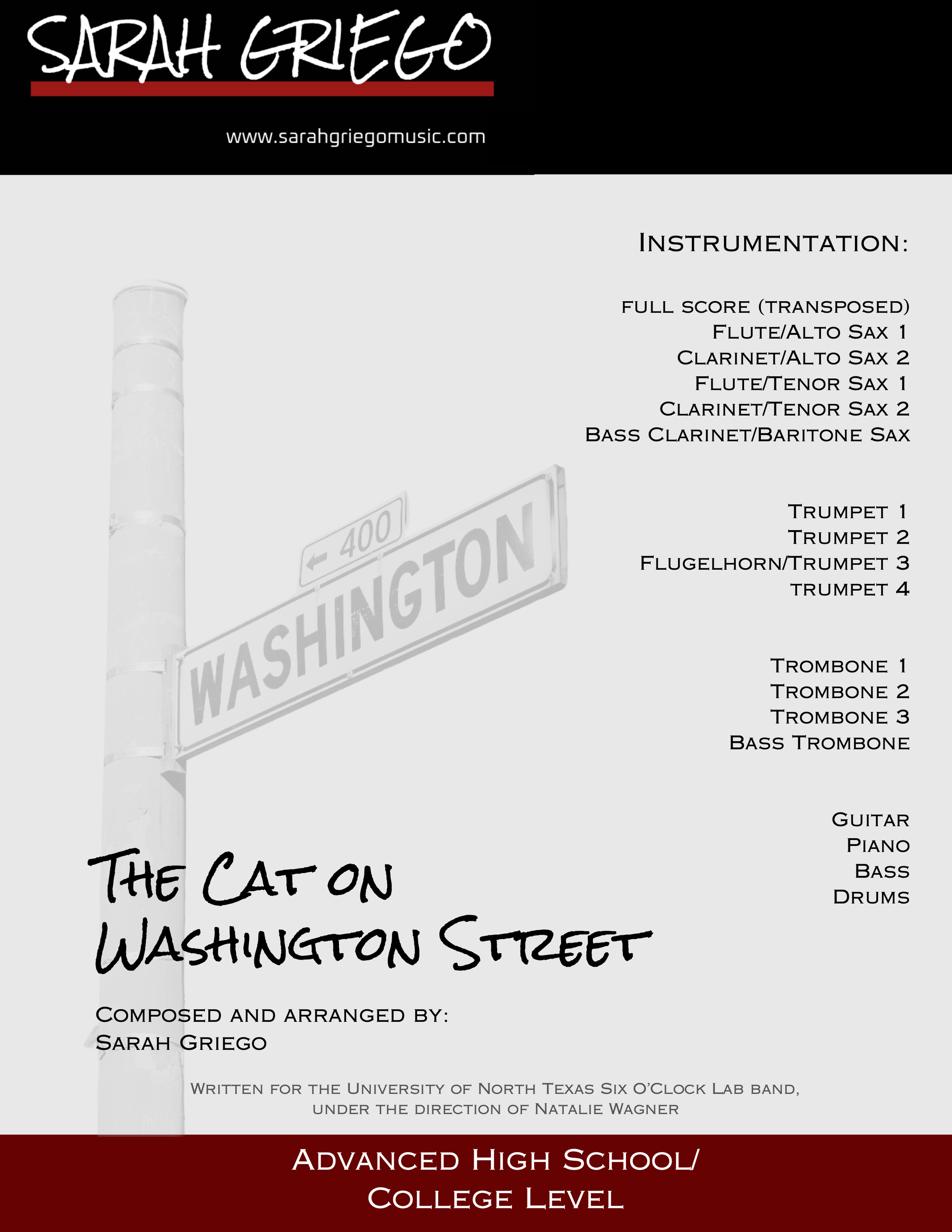
This piece will have your audience make way for your swingin’ doubling saxophone section. Inspired by the hard bop minor blues attitude of Bobby Timmons’ “Dat Dere”, this piece showcases the versatility of the woodwinds in a heavy triplet-feel groove.
Imagine the sophisticated and mysterious alley cat hanging around the back alleyways of jazz clubs galore. This piece establishes the cat’s melodic “theme” demonstrated by the woodwinds and later echoed by our “jazz cats”, the trumpet section. We send off the soloist with a large and attention-grabbing shout section, which can be opened to any number of soloists. Afterward, we find ourselves immersed in the poised and delicate movement of our alley cats sleuthing around in a march-like fashion. Suddenly, the large and in-charge big band brass section makes their final statement for the final tune of the night by way of the shout section. We conclude our musical evening with our cats reaching their destination and watching the sunrise in a soft, and luxurious suspended chord.
This piece includes separate chord changes for B flat, E flat, and C instruments, and allows for many soloists to feature. The rhythm section should approach this style from the lens of Bobby Timmons and Nat and Julian “Cannonball” Adderley.
Some helpful musical recordings to reference include, but are not limited to:
“This Here is Bobby Timmons”, Bobby Timmons, (1992)
“Them Dirty Blues” (Remastered), The Cannonball Adderley Quintet, (2000)
“Moanin’” (Expanded Edition), Art Blakey & The Jazz Messengers (1959)
This piece is inspired by the dedication and encouragement of Washington State’s own, Natalie Wagner, who emphasizes the importance of treating woodwind doubles as “second primaries”.